Posts

Showing posts from September, 2023

Latest

Beyond Fact-Checking: Prebunking and the Future of Digital Information Integrity

Image
Produced for @empowervmedia Edited & fact-checked by @jorgebscomm Prebunking misinformation before it spreads builds cognitive immunity.   (📷:empowervmedia) T he current global landscape is defined by a paradox of connectivity where the tools meant to unite humanity are frequently weaponised to fragment it. According to the 2025 Global Risks Report, misinformation and disinformation have emerged as the primary short-term threats to societal stability, surpassing even economic instability and environmental crises. This "infodemic" is not merely a technical glitch but a structural failure of the digital ecosystem, which was originally designed for engagement rather than accuracy. Structural challenges persist because the information environment was built to prioritise viral content, often allowing falsehoods to travel faster than verified facts. The consequences of this erosion are quantifiable across diverse sectors of public life. In the United States, trust in national...

The Role of Social Media in Shaping Behaviour and Attitudes

Image
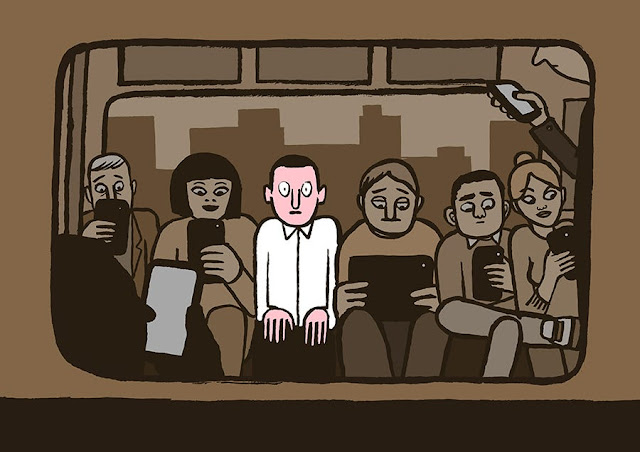
FACT CHECKED ✅ I n an age where we're more connected than ever before, social media has emerged as a powerful influencer of our beliefs, behaviours, and attitudes. From politics to fashion, it's no secret that these platforms have a profound impact on our lives. But what exactly is the role of social media in shaping who we are? Social media has emerged as a powerful influencer of our beliefs, behaviours, and attitudes (📷  source ) Social media has transformed the way we communicate, consume information, and even view ourselves. It's the virtual stage where we showcase our lives, opinions, and values. As we scroll through our feeds, we are constantly bombarded with an array of content that shapes our perceptions, decisions, and ultimately, our behaviour. The Filter Bubble We all have our unique feed, tailored by algorithms to show us content that aligns with our previous choices. This filter bubble can limit our exposure to diverse perspectives, reinforcing our existing b...

Unravelling the Intricacies: Narcissism's Interplay with Fascist Ideologies

Image
N arcissism and fascism are terms frequently discussed in modern discourse, each rich with their own historical and psychological significance. But, how do these concepts intertwine? Let's embark on a journey that delves into their connection. Narcissism, the eco chamber of self-admiration. 📷 source Narcissism: A Primer Narcissism, rooted in the ancient Greek myth of Narcissus, is a term used in psychology to describe excessive self-admiration and self-centeredness. In its clinical form, narcissistic personality disorder , individuals possess an inflated sense of their importance, deep need for admiration, and a lack of empathy for others. Advertisement "What is Fascism?" ▶️1m09s The Rise of Fascism Fascism is a political ideology that emerged in the early 20th century, predominantly in Europe. It advocates for a centralized autocratic government led by a dictatorial leader, severe economic and social regimentation, a...

Media Effects on Public Perception: Evidence and Insights

Image
T he media plays a significant role in shaping our perception of the world around us. But how does it really affect us? In this article, we'll unravel the complex relationship between media and public perception, breaking down the evidence and offering insights that everyone can understand. 📷 source Media's Influence on Beliefs Have you ever noticed how news coverage can impact your opinions? It's no coincidence. Media can influence our beliefs and attitudes, often subtly. This phenomenon, known as media effects, is well-documented. It's essential to understand that what we consume through media can shape how we view the world. Advertisement "Media Effects" ▶️2m59s The Power of Framing One way media exerts its influence is through framing. The way a story is presented can change its perceived importance or even its meaning. For example, framing a crisis as an "opportunity for growth" versus a "disaster" can ...

Key Theories in Psychosociology: A Primer

Image
P sychosociology is the study of how society and our minds intertwine, influencing our behaviour, beliefs, and interactions. But the theories behind it can often seem complex. In this article, we'll simplify the key theories in psychosociology, making them accessible and relevant to everyone. 1. Social Identity Theory Imagine you belong to a group—be it cultural, racial, or professional. Social Identity Theory suggests that we derive part of our identity from these groups. It helps explain why we feel pride in our identities and sometimes prejudice against others. Understanding this theory sheds light on group dynamics and intergroup relations. Advertisement: Scroll down to continue Advertisement "Nonviolent Communication: A Language of Life" by Marshall B. Rosenberg Embrace Nonviolent Communication. Learn the language of empathy. Foster better relationships. Get it on Amazon 2. Social Cognitive Theory Ever heard of ...